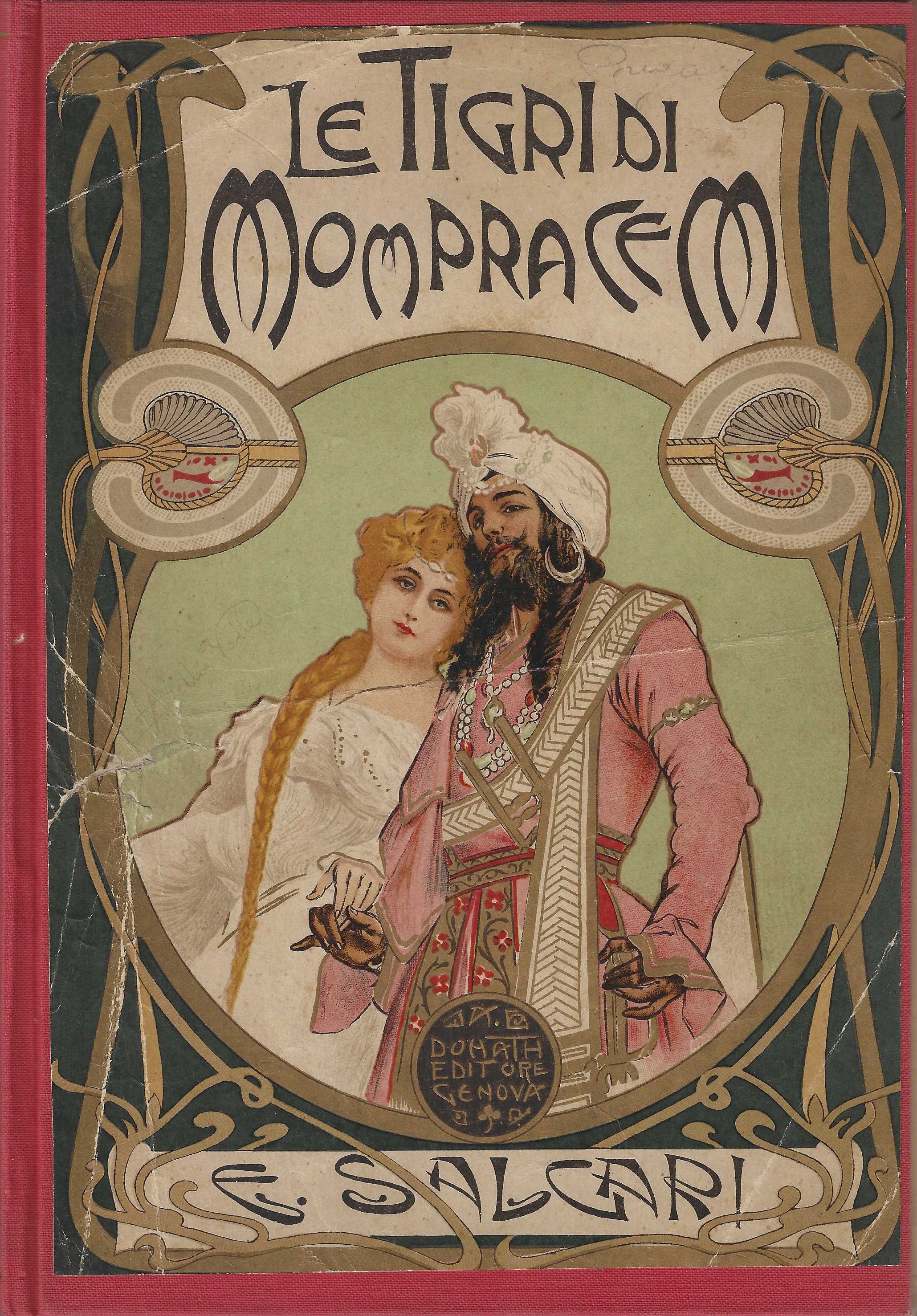
Sandokan is fiction: a dispossessed prince turned pirate who fights empire from the imagined island of Mompracem. But the question that gives his adventures their force is historical. In nineteenth-century Borneo, who could use violence, control rivers and sea lanes, and decide that one armed fleet represented “order” while another represented “piracy”?
KEY FACTS
Before the label
- Sandokan
- A fictional anti-imperial hero created by Italian writer Emilio Salgari; the first serial appeared in 1883.
- Mompracem
- A fictionalised island base. Salgari’s geography drew on reports and imagination, not field research in Borneo.
- Maritime world
- Brunei, Sulu and many coastal and riverine polities governed trade, tribute, alliance and territory before British expansion.
- Documented harm
- Long-distance raiding, captivity and enslavement were real and expanded dramatically around the Sulu Zone.
- Colonial category
- British officials often grouped raiding, warfare, political rivalry and resistance under the single term “piracy.”
- Central dispute
- Historians disagree about particular actors and battles, but not about the need to read colonial labels critically.
THE PIRATE EVERYONE REMEMBERS
A tiger born in print
Emilio Salgari introduced Sandokan to Italian newspaper readers in 1883. In the later novel cycle, the “Tiger of Malaysia” is not a simple criminal. He is a nobleman dispossessed by imperial power, commanding a multi-ethnic brotherhood from Mompracem and fighting British enemies. Salgari reverses the usual colonial adventure: the figure called a pirate becomes the protagonist, while European expansion becomes something readers are invited to question.
That reversal is culturally important, but it is not documentary history. Salgari never conducted research in Borneo. His setting blends geography, travel writing, colonial reportage and invention. Historian Bianca Maria Gerlich nevertheless found a recognisable historical background in the conflict around Marudu in northern Borneo, while recent literary scholarship reads the series as capable of unsettling the morality of empire (Gerlich, 1998; Keenan, 2023). Sandokan is therefore best understood as an imaginative counter-gaze—not a disguised biography.
FICTION MEETS THE MAP
From the Pearl of Labuan to Sandakan
In Salgari's fictional world, Marianna Guillonk is celebrated as the "Pearl of Labuan." The character and her romance with Sandokan belong to fiction, but Labuan does not. It is a real Malaysian federal territory made up of a main island and smaller islets, lying off the coast of Borneo near Brunei Bay. Today, official Malaysian tourism material also describes Labuan as the "Pearl of Borneo" (Tourism Malaysia).
Farther east in Sabah is the real city of Sandakan - spelled with an a, unlike Sandokan's o. The resemblance is evocative, but it is not evidence that the city gave the fictional hero his name. Sandakan, formerly known as Elopura, is an established city and an important gateway to the wildlife and landscapes of eastern Sabah (Sabah Tourism Board).
THE BRITISH STORY
“Pirates” versus civilisation
British naval and popular accounts offered a compelling moral script. Dangerous pirates attacked trade and coastal settlements; British ships destroyed their strongholds; commerce and peace followed. Captain Henry Keppel’s 1846 account announced this purpose in its title: The Expedition to Borneo of H.M.S. Dido for the Suppression of Piracy. It incorporated James Brooke’s journals and helped turn Brooke’s campaigns into a public story of humanitarian rescue.
The violence described in those records was not invented. Communities feared raids; boats and settlements were attacked; people were killed or carried away. Yet the records were also arguments for intervention, patronage and territorial authority. Farish Noor shows how Brooke, Keppel and other writers constructed Borneo as a “den of pirates,” a landscape made to appear in need of outside rule (Noor, 2020). A source can record real attacks and still organise them into a political narrative.
WHAT EXISTED BEFORE EMPIRE
Not an empty or lawless sea
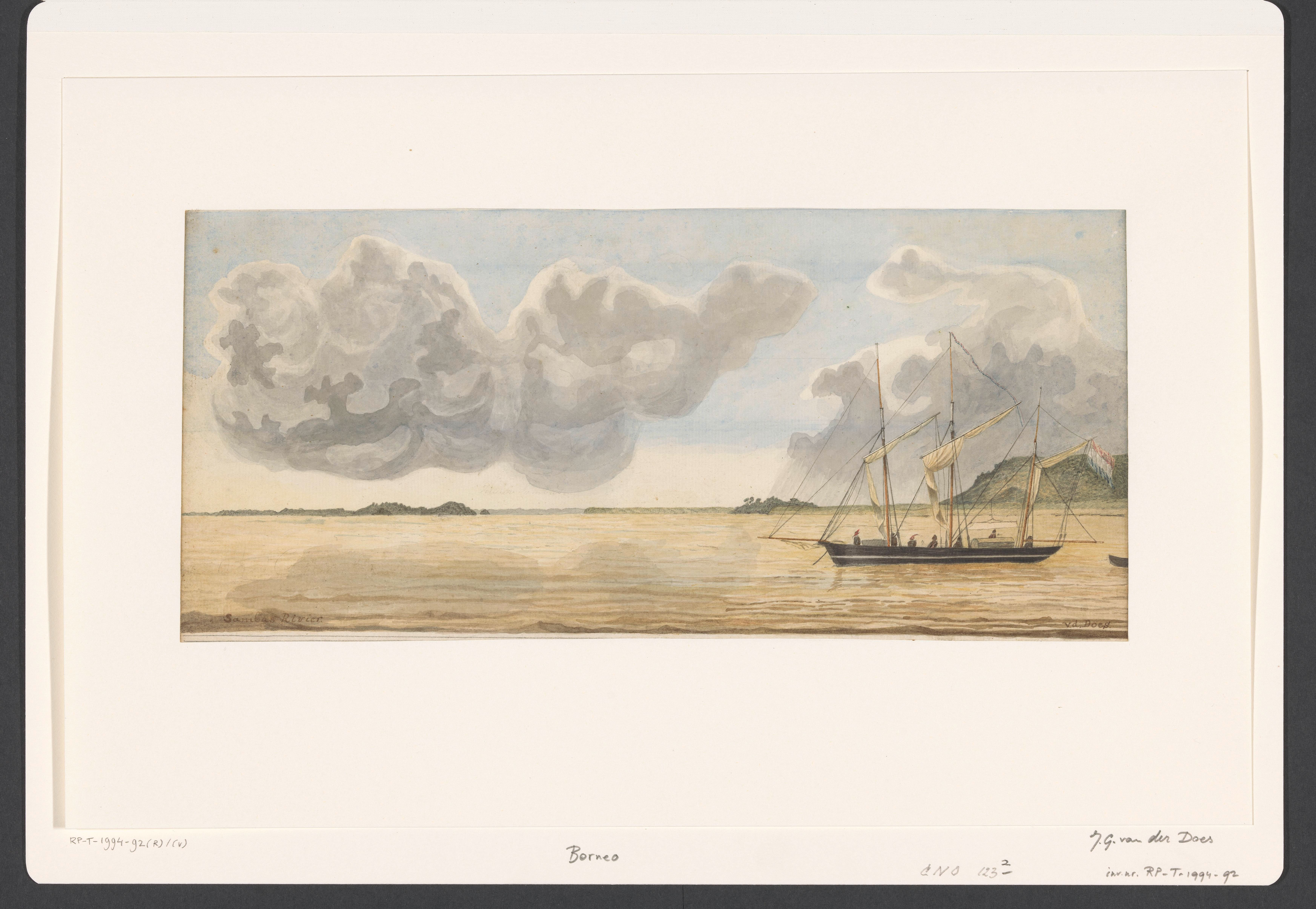
Borneo’s coasts and surrounding seas formed an interconnected political world. The Sultanates of Brunei and Sulu, Sambas and other harbour polities linked river mouths, forest interiors, islands and international markets. Authority was layered rather than absent: sultans, aristocratic houses, river leaders, Indigenous customary systems, trading diasporas and maritime communities exercised overlapping claims.
UNIMAS scholarship drawing on Sarawak Malay oral histories and regional genealogies shows that long periods of Sambas influence in Sarawak were obscured by later histories centred on Brooke rule (Mansor & Awang Pawi, 2016). James Warren’s work similarly asks historians to study the Sulu Zone as a powerful maritime-economic system rather than dismissing Southeast Asian polities as merely “pirate states” (Warren, 2007).
A contextual diagram, not a historical boundary map. Authority and movement crossed today’s national borders; routes changed by season, alliance and period.
RAIDING, SLAVERY AND POWER AT SEA
The victims cannot disappear from the argument
Critiquing colonial language must not become an apology for raiding. From the late eighteenth century, organised Iranun and Balangingi Sama fleets carried out long-distance expeditions across maritime Southeast Asia. Captives were killed, separated from families, sold, incorporated into households or forced to work in fishing, agriculture and the collection of export commodities. Coastal communities adapted through flight, fortification, negotiation and resistance.
Warren links the expansion of raiding to the Sulu Sultanate’s growing participation in global trade. Demand for sea cucumber, pearls, birds’ nests and other commodities required labour; Chinese and European commercial networks helped create the market conditions in which captive labour became central. His reconstruction uses colonial archives but also testimony about captivity, interviews and regional fieldwork (Warren, 2003). The Iranun and Balangingi were historically changing communities, not timeless “pirate races.” Ethnicity itself was shaped by mobility, alliance, warfare and the colonial attempt to classify people.
Victims’ experiences establish a moral reality that terminology alone cannot dissolve. The analytical point is narrower: the existence of violent raiding does not make every person, polity or opponent called “pirate” guilty of the same acts, nor does it automatically legitimate unlimited colonial retaliation.
WHEN “PIRATE” BECAME POLITICAL
A category made by unequal power
In European law, piracy was imagined as violence beyond lawful sovereign authority. In practice, imperial states decided which sovereignties they recognised. A local ruler’s fleet might understand an action as war, tribute enforcement or alliance politics; a British officer could classify the same action as piracy. British force then appeared as policing rather than warfare.
Nicholas Tarling’s classic study placed anti-piracy within British political expansion in the Malay world. Robert Antony’s wider analysis argues that European categories changed alongside empire and that anti-piracy rhetoric could legitimise political control (Antony, 2023; Tarling, 1963). This does not mean all piracy charges were false. It means the label carried legal and military consequences that were distributed asymmetrically.
Can document routes, weapons, deaths and official claims; cannot be assumed neutral about the identity or motives of those targeted.
Can reveal the human experience of raiding and slavery; survives unevenly and is often mediated through colonial collectors.
Preserves community memory and moral interpretation; requires attention to performance, transmission and later political context.
Can compare archives and expose categories, but historians disagree and remain shaped by the evidence that survived.
Reveals an anti-imperial imaginative possibility; cannot verify a battle, person or place.
JAMES BROOKE AND THE ANTI-PIRACY WARS
Security, commerce and territorial rule
James Brooke arrived in Sarawak in 1839, assisted Brunei’s governor in suppressing a local rebellion, and became Rajah in 1841. His authority expanded through alliances, river campaigns and British naval support. Anti-piracy was both a moral cause and a mechanism of state-building: it opened routes, weakened rivals, rewarded allies and made Brooke useful to British strategic interests.
One especially contested episode is the 1849 Battle of Beting Maru (also rendered Beting Marau or Batang Marau). Brooke and Royal Navy forces attacked a large returning fleet associated with Saribas and Skrang Iban communities. British accounts presented a decisive victory over pirates. Later estimates often repeat roughly 500 deaths, but exact numbers and the legal status of every person in the fleet are not independently recoverable. What is clear is that the operation involved overwhelming naval firepower and the destruction of settlements.
The scale of killing triggered criticism in Britain. Radical MP Richard Cobden and others challenged the use of naval power, prize money and the breadth of Brooke’s piracy claims. Simon Layton shows how Brooke’s defenders proposed treating alleged pirates through military violence rather than ordinary legal process—a “civilised savagery” that sat uneasily with British claims to law (Layton, 2026). The controversy itself matters: even contemporaries did not accept that calling people pirates ended the ethical or legal argument.
RESISTANCE OR PIRACY?
Contested actors, different conflicts
Rentap
Remembered in Iban and Malaysian narratives as a leader who resisted Brooke expansion from the 1850s. Brooke records linked him to raiding and head-taking. Neither “pirate” nor uncomplicated national hero captures the shifting alliances, ritual warfare and defence of autonomy involved.
Sharif Masahor
A powerful local leader who opposed Brooke encroachment in the Rejang and was implicated in an anti-Brooke plot. Colonial records framed rebellion against established rule; local memory often frames resistance to an expanding foreign dynasty.
Mat Salleh
Led resistance against the British North Borneo Chartered Company in the 1890s over authority, taxation and movement. His conflict belongs to a later corporate-colonial setting and should not be folded casually into Brooke-era piracy.
Sharif Osman of Marudu
Targeted by a British expedition in 1845 and denounced as a pirate in Brooke-aligned accounts. Historians debate his activities and political position; Gerlich identifies the Marudu conflict as part of Sandokan’s historical background, not proof of a one-to-one model.
Interpretive caution: these actors lived in different decades and political systems. They are grouped here to show how colonial records converted varied challenges to expanding rule into criminal or rebellious categories—not to claim identical motives.
MYTH VERSUS EVIDENCE
Five claims to reconsider
The region had complex trade routes, sultanates, political alliances and local systems of authority. Authority was plural, not absent.
British campaigns did target raiding, but they also strengthened colonial control, commercial access and territorial power.
No. Raiding could involve killing and enslavement. The issue is that the colonial label was broad, selective and politically useful.
Imperial authorities helped create and enforce the legal categories that made their own force appear legitimate.
Sandokan is fictional, but the world of colonial conflict, maritime power and dispossession that made him compelling was real.
SANDOKAN REVERSES THE STORY
The accused becomes the hero
Salgari’s achievement was not factual accuracy. It was narrative reorientation. His pirate has loyalty, grief, political purpose and dignity. British authority is no longer the invisible measure of civilisation; it becomes a force that can dispossess and dominate. The reader crosses the moral line drawn by colonial prose and looks back from the other side.
That reversal remains incomplete. Salgari worked inside the exotic conventions of European adventure fiction, and his Borneo is a fantasy assembled from afar. A decolonial reading should therefore not replace one legend with another. It should use Sandokan as an opening, then return authority to Southeast Asian histories, local archives, oral traditions and the experiences of people whose lives were reduced to a colonial category.
TIMELINE
Trade, war and the making of a pirate
- Maritime polities
Brunei, Sulu and regional harbour and river powers organise trade, tribute, alliance and territory.
- The Sulu Zone expands
Global commodity demand and warfare drive long-distance raiding, captive labour and political transformation.
- Brooke enters Sarawak
James Brooke intervenes in a Brunei-governed conflict and becomes Rajah of Sarawak.
- Naval campaigns
Brooke and British naval allies attack coastal and river targets, including Marudu, under an anti-piracy mandate.
- Beting Maru
Brooke-aligned forces defeat a large Saribas/Skrang fleet; casualties and the breadth of the piracy designation become controversial.
- Opposition to Brooke rule
Rentap and Sharif Masahor resist different dimensions of expanding Rajah authority.
- Sandokan appears
Salgari’s first serial turns a colonially coded pirate into an anti-imperial protagonist.
- Mat Salleh resistance
In North Borneo, Mat Salleh fights the Chartered Company over power, taxation and territorial authority.
- Mompracem in book form
The novel and illustrated editions consolidate Sandokan’s place in global popular culture.
WHY THIS STILL MATTERS
Who gets to name violence?
“Piracy” still sounds like a factual answer, but it often begins a political question. Who recognises sovereignty? Whose trade is protected? Which archive survives? Who receives a trial, and who meets a gunboat? Historical analysis must hold two truths together: maritime raiding and enslavement produced devastating harm, and imperial anti-piracy could convert selective law into territorial power.
Sandokan was fictional, but the question behind him is real. In colonial Borneo, “piracy” was never only about crime at sea. It was also about power: who could use violence, who could control trade, and who had the authority to decide whose resistance counted as criminal.
REFERENCES · APA 7
Selected books, papers and archives
Links checked 3 August 2026. Colonial accounts are listed as primary sources and read critically; they are not treated as neutral verification of the people they label.
- Antony, R. J. (2023). Pirates of empire: Colonisation and maritime violence in Southeast Asia. Cambridge University Press.
- Gerlich, B. M. (1998). Sandokan of Malludu: The historical background of a novel cycle set in Borneo by the Italian author Emilio Salgari. Archipel, 55, 29–41.
- Keenan, N. S. R. (2023). Adventure and misadventure in the time of empire: A reading of Emilio Salgari’s Sandokan series and Hugo Pratt’s Corto Maltese series [Doctoral thesis, University of Edinburgh].
- Keppel, H. (1846). The expedition to Borneo of H.M.S. Dido for the suppression of piracy (2nd ed.). Chapman and Hall. [Colonial primary source].
- Layton, S. (2026). The civilised savagery of Rajah Brooke. In Piratical states: British imperialism in the Indian Ocean world, c. 1780–1850. Cambridge University Press.
- Mansor, S., & Awang Pawi, A. A. (2016). From Po-li to Rajah Brooke: Culture, power and the contest for Sarawak. Journal of Borneo-Kalimantan, 2(2).
- Noor, F. A. (2020). Brooke, Keppel, Mundy and Marryat’s Borneo as “the den of pirates”. In The discursive construction of Southeast Asia in 19th century colonial-capitalist discourse. Amsterdam University Press.
- Reinhardt, J. M. (1970). Administrative policy and practice in Sarawak: Continuity and change under the Brookes. The Journal of Asian Studies, 29(4), 851–862.
- Salgari, E. (1900/1906). Le tigri di Mompracem. A. Donath. [Fiction; illustrated edition].
- Tarling, N. (1963). Piracy and politics in the Malay world: A study of British imperialism in nineteenth-century South-East Asia. Donald Moore.
- Tourism Malaysia. (n.d.). Labuan. Malaysia travel guide. Accessed August 3, 2026.
- Sabah Tourism Board. (2026). Sandakan. Accessed August 3, 2026.
- Walker, J. H. (1998). James Brooke and the Bidayuh: Some ritual dimensions of dependency and resistance in nineteenth-century Sarawak. Modern Asian Studies, 32(1), 91–115.
- Warren, J. F. (2003). Iranun and Balangingi: Globalization, maritime raiding and the birth of ethnicity. NUS Press.
- Warren, J. F. (2007). The Sulu Zone, 1768–1898: The dynamics of external trade, slavery, and ethnicity in the transformation of a Southeast Asian maritime state (2nd ed.). NUS Press.
Researched and written by Julieta Castiñeira de Dios.
Inspired by my brother, Agustín Castiñeira de Dios - by his rebellious spirit, his curiosity, and his determination to look beneath the surface for the truths that easier stories leave out.